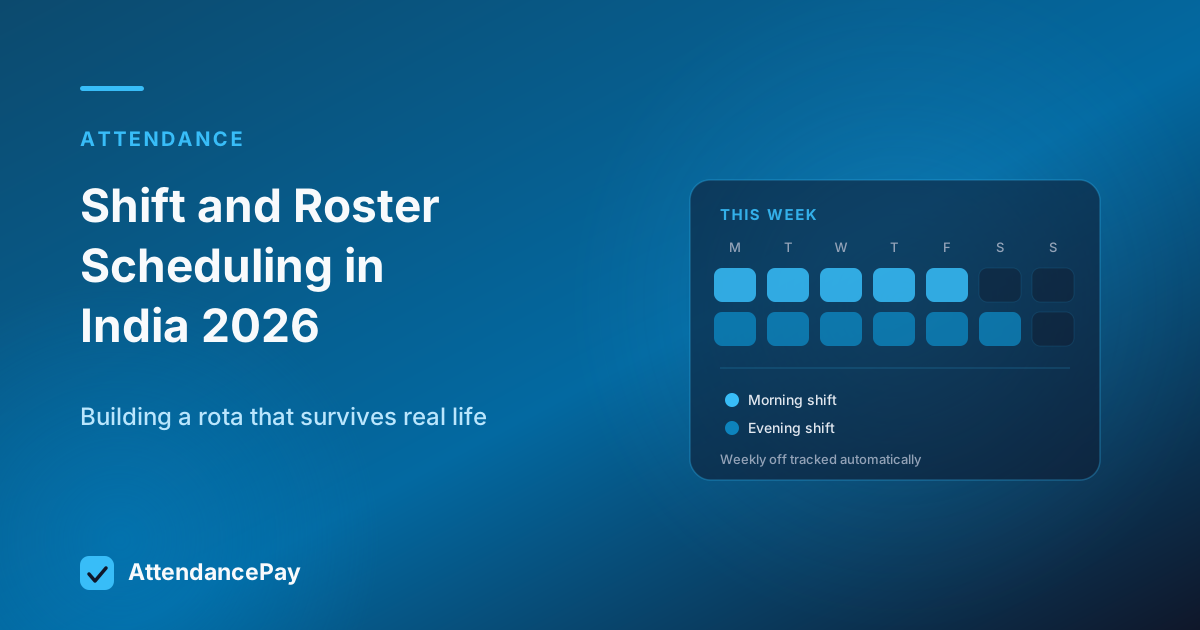
A shift roster looks, on paper, like a scheduling problem: assign enough people to each shift, respect their weekly off, and publish it before the week starts. In practice it is a compliance document and an attendance forecast at the same time, and most of the pain in running one comes from treating it as neither.
The shapes rosters actually take
Almost every Indian roster is a variant of a small number of patterns:
- Fixed shift. Everyone works the same hours every day — simplest to run, common in offices and back-office operations.
- Rotating shift. Employees cycle through morning, evening and night shifts on a schedule, common in manufacturing, retail and 24x7 operations. Rotation direction matters for employee wellbeing — clockwise rotation (morning to evening to night) is generally easier on circadian rhythm than counter-rotation.
- Split shift. Two working blocks in a day with a long unpaid gap between them — common in hospitality and retail around peak hours.
- Flexible / staggered shift. Employees choose or are assigned a start time within a band, common where the work does not require simultaneous coverage.
The pattern you choose is a business decision. What is not optional is the compliance layer underneath it.
Weekly off is a rule, not a courtesy
The Factories Act (and the equivalent state Shops and Establishments provisions) require at least one weekly rest day, and generally cap consecutive working days without a break — commonly ten days between two weekly offs, though the exact figure depends on the Act that covers your establishment. A roster that quietly rolls someone's weekly off forward two weeks in a row to cover a shortfall is a compliance breach that is invisible until someone counts the days by hand.
This is the single most common roster failure: not malicious, just arithmetic that nobody is checking in real time. A roster tool that tracks consecutive working days per employee and flags a breach before it happens is doing compliance work, not just scheduling.
Rosters create overtime — usually by accident
Every hour scheduled beyond the standard shift length is a potential overtime liability, and rosters are where that liability is created, days before payroll ever sees it. A manager who extends three people's shifts by two hours each to cover a gap has just committed to a specific overtime cost — whether or not anyone connects that decision to the payroll line it produces a month later. See our breakdown of overtime pay rules in India for how that cost is actually calculated.
The fix is not to schedule overtime less — sometimes it is genuinely needed — it is to make the cost visible at the moment the roster is built, not a month later in a payroll variance report.
Why the roster and the attendance record have to be one system
Here is the failure mode that causes the most disputes: the roster says an employee was scheduled for the morning shift, but attendance recorded them clocking in at an evening-shift time, and nobody reconciles the two until a payroll query comes in. When scheduling lives in one spreadsheet and attendance lives in a separate system, this drift is inevitable — not because anyone is careless, but because two independent records of the same fact will diverge over time.
The durable fix is architectural, not procedural: the roster should be the thing attendance is measured against, in the same system, so a late clock-in, a missed shift or a shift swap is visible immediately rather than discovered at month end. AttendancePay's shift and roster management keeps scheduling and attendance in one place for exactly this reason — you can read the fuller picture in shift and roster management, and the same one-source-of-truth argument applies to payroll in our note on why payable days never match.
A roster checklist that holds up
- Every employee's weekly-off cadence is tracked and a breach is flagged before publishing, not discovered after.
- Shift extensions are visible as an overtime cost at the moment they are scheduled.
- Shift swaps are recorded in the same system attendance is measured against, not handled by a side conversation.
- The published roster and the attendance record are the same data, not two documents that are supposed to agree.
Get those four right and the roster stops being a monthly source of disputes and quietly becomes what it was always meant to be — a plan the business can actually rely on.