The biometric-versus-mobile question is usually argued as if it were old technology against new. It is not. Both are mature, both work, and the right answer is almost never universal across a company. It is determined by a single practical fact: where your people actually work. A machine operator who badges in at one door and a field sales executive who visits six clients a day are not the same attendance problem, and no single method is best for both.
This is a straight comparison — what each approach is genuinely good at, where each one fails, and why most companies of any size end up using both.
What "biometric" and "mobile" actually mean here
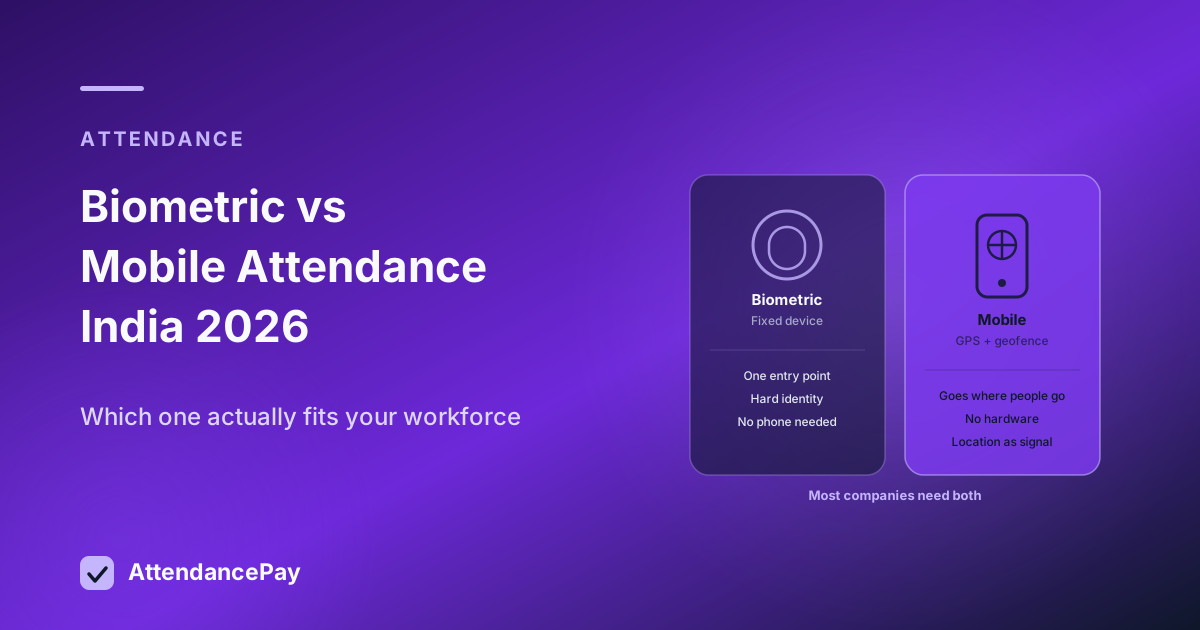
Biometric attendance means a fixed device — fingerprint or facial-recognition terminal — mounted at an entrance. The employee presents a finger or a face, the device verifies identity locally, and a punch is recorded. Its defining trait is that attendance happens at a place.
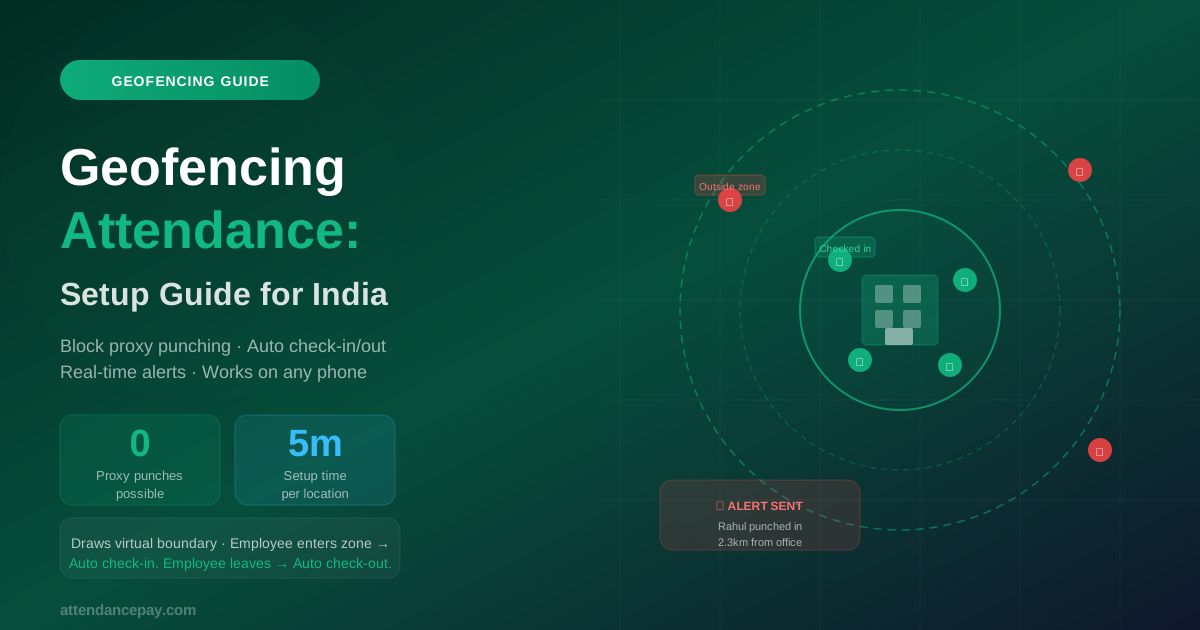
Mobile attendance means the employee marks attendance from a phone, with identity and location established through the device — typically some combination of GPS, a geofence around an approved site, and often a selfie or face check. Its defining trait is that attendance travels with the person.
That single difference — place versus person — drives every trade-off below.
Where biometric devices win
- A fixed workplace with a clear entry point. A factory, a warehouse, a single office — one door, everyone through it. This is exactly what a terminal is for.
- Hard identity at the moment of the punch. A fingerprint or face at the device is difficult to fake in person, which is why biometrics became the standard answer to buddy punching for on-site staff.
- No dependence on the employee's own phone. Useful where staff do not carry smartphones or where personal-device policies are restrictive.
Where biometric devices struggle
- Anyone who is not at that door. Field staff, multi-site workers, drivers, home-based employees — a fixed terminal simply cannot see them.
- Hardware, and everything that comes with it. Devices are a capital purchase per location, plus power, network, mounting, spares and a maintenance relationship. A queue at one terminal every morning is a real cost at scale, and a dead device is a day of missing attendance.
- Connectivity and sync. Terminals that push punches to a server depend on that link staying up; when it drops, punches queue on the device and gaps appear until someone notices. Reliable device-to-server sync across a fleet of mixed hardware is harder in practice than it looks in a demo.
- Hygiene. Shared-touch fingerprint readers became a live concern after 2020, which is part of why facial recognition displaced fingerprint in many deployments.
Where mobile attendance wins
- People who move. Field sales, service technicians, merchandisers, delivery staff — attendance and location captured wherever the work is, with no terminal to visit. This is covered in depth in GPS attendance and live employee tracking.
- No hardware to buy or maintain. The device is already in the employee's pocket. Rolling out to a new site is a configuration change, not a purchase order.
- Location as a first-class signal. A geofence can require that a punch happens inside an approved site, which is a control a fixed terminal cannot offer for distributed work.
Where mobile attendance struggles
- Spoofing moves, it does not disappear. A fixed terminal's weakness is buddy punching; mobile's weakness is GPS and location spoofing. Serious mobile attendance answers this with a mix of signals — geofence, device checks and a face or selfie at punch — rather than trusting coordinates alone. We wrote about the limits honestly in how GPS attendance stops buddy punching (and where it still falls short).
- It depends on the employee's phone. Battery, permissions and personal-device policies are all real friction, especially for shop-floor or lower-wage roles.
- Indoor location is genuinely hard. GPS is weak inside large buildings, which is why indoor sites often still want a fixed capture point.
The kiosk: biometric verification without the biometric hardware
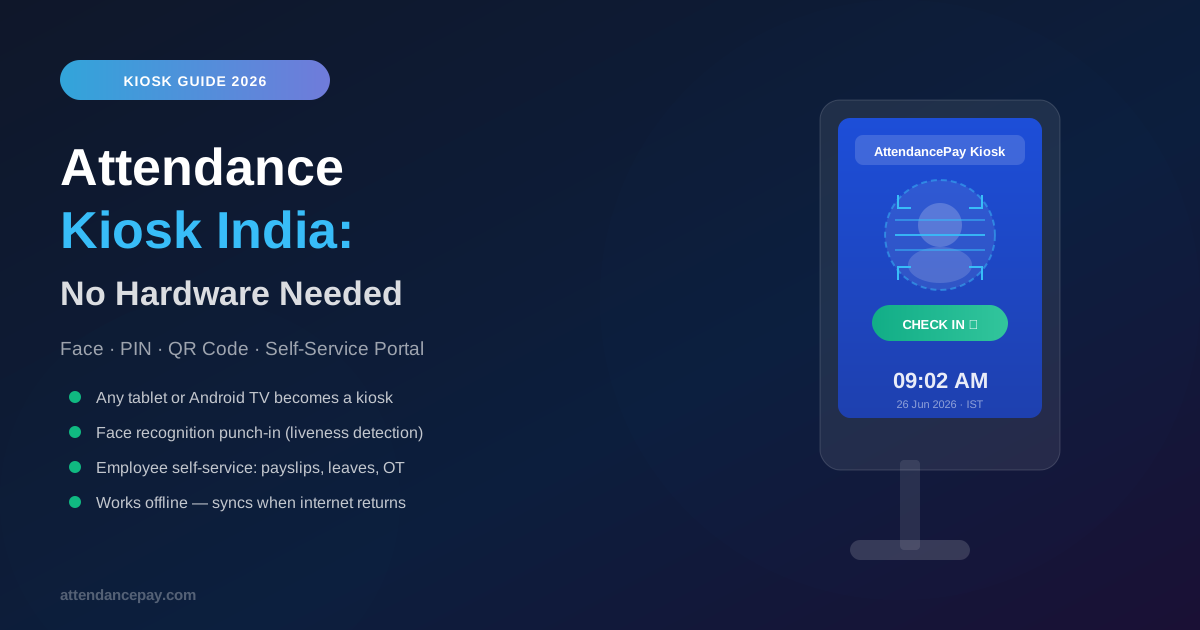
There is a third option that is easy to miss because it sits between the two. A face-recognition kiosk turns an ordinary tablet at the entrance into a shared attendance point: employees mark attendance with a face check, exactly like a biometric terminal, but on hardware you already understand and can replace at any electronics shop — no proprietary device, no vendor lock-in. It gives on-site teams the hard-identity, no-phone-needed benefits of a terminal without the fixed-device supply chain. AttendancePay's face-attendance kiosk is exactly this, and for many offices it is the most practical single answer.
The honest conclusion: it is not either/or
For a company with only a single fixed site and staff who do not travel, a terminal or a tablet kiosk at the door may be all you need. For a company with any field or multi-site workforce, mobile is not optional — a terminal cannot see those people at all. And most companies of any size are both: a kiosk or terminal for the office and shop floor, and mobile with geofencing for everyone in the field, all feeding one attendance record.
That last clause is the one that matters. The failure mode is not choosing the "wrong" method — it is running two disconnected systems whose numbers never reconcile at payroll. Choose per group of employees by where they actually work, but insist that whatever you choose lands in a single system. If you want the fuller picture of how location-based capture fits together, attendance management is the place to start, and our geofencing setup guide covers the control that makes mobile trustworthy.