A driver does not have a desk, a gate, or a fixed shift timing in any conventional sense. Their workplace is a truck, a delivery van, or a route that changes every day, and their working hours are shaped by traffic, loading time and distance, not a nine-to-six clock. Attendance software built around a fixed location and a fixed shift was never designed for this, and forcing a logistics workforce through it produces exactly the two problems every fleet operator already knows: attendance nobody trusts, and overtime nobody can defend.
Attendance that has to work without a gate to walk through
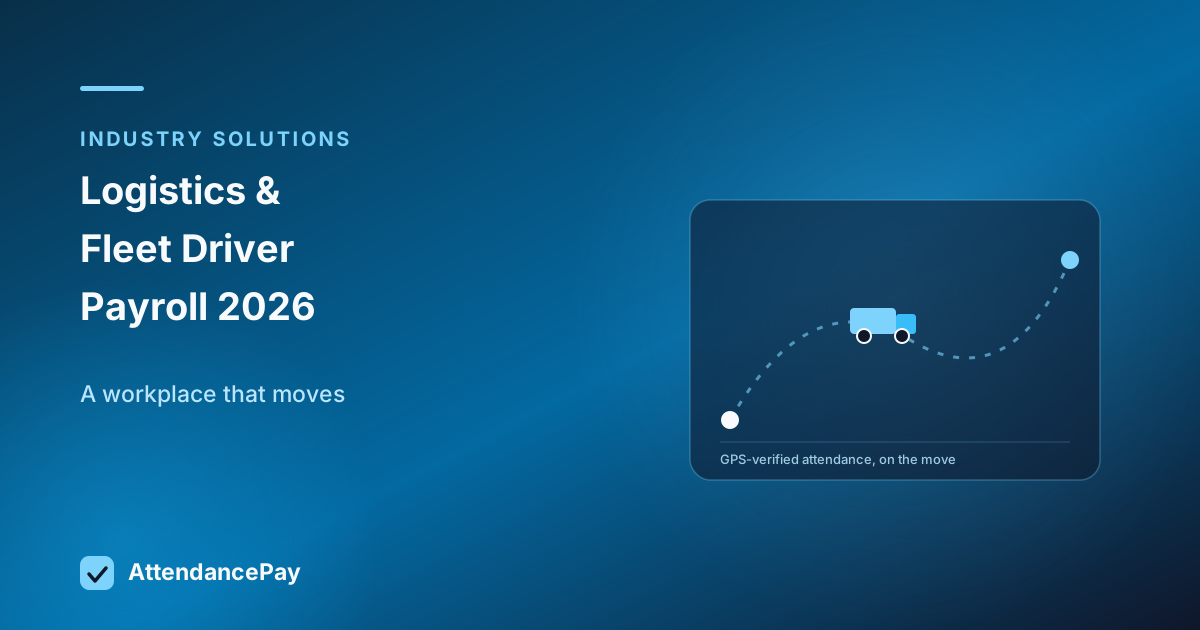
A driver cannot punch in at a biometric device because there usually is not one anywhere near where their day starts. Attendance needs to be captured from wherever the driver actually is — at the depot, at a client site, or on the road — which means it has to be location-verified rather than location-fixed. GPS-based attendance and live tracking exist for exactly this reason: they confirm where a punch happened without requiring the driver to be at one specific address, and they give a fleet operator visibility into where the team is through the day, not just whether they clocked in this morning. See GPS attendance and live employee tracking for how this works, and our honest look at the real limits of location verification in how GPS attendance stops buddy punching (and where it still falls short).
Overtime that reflects how a driver's day actually stretches
A logistics operation's overtime is not the occasional late night an office sees — it is routine and directly tied to route length, traffic and loading delays, all of which vary daily and are largely outside the driver's control. That makes overtime a genuine, recurring cost that needs to be calculated from real hours, not approximated. A configurable overtime rate — fixed or linked to the driver's own pay — with separate weekend and holiday multipliers and a sensible daily cap means a long-haul day is priced correctly without a supervisor manually approving every entry. See overtime management, and the statutory basis in overtime pay rules in India.
Hourly wages for drivers, monthly for dispatch and admin — together
Most logistics companies pay drivers and loading staff hourly or per-trip while dispatch, admin and management staff are on monthly salaries, and both groups need to settle in the same payroll cycle. Salary type is configured per employee, hourly staff are paid from recorded hours at their configured rate with overtime applied, and monthly staff are paid on payable days — processed together in one run. See payroll management and how attendance becomes payroll.
Per-employee shift assignment for a workforce that never runs one schedule
Drivers on different routes start and end at different times on different days, sometimes covering for a colleague at short notice. Each driver can be assigned their own shift, changed per date without it being a manual exception, so route reassignment does not break the attendance record it produces. Full mechanics in shift and roster management.
What to check before choosing a system for a logistics operation
- Can attendance be captured and verified without requiring a fixed location or device?
- Is overtime calculated from actual recorded hours, with weekend and holiday rates handled separately?
- Can hourly drivers and monthly dispatch/admin staff be paid in the same payroll run?
- Can a driver's shift or route assignment change per day without manual rework?
A logistics or fleet operation that can answer yes to all four has a system built for a workforce that is, by definition, never in one place — which is exactly the industry's actual problem, not an edge case in a generic attendance tool. For a broader look at running distributed teams as a business function, see our logistics industry page.