A retail chain or warehouse operation runs on a workforce that changes shape through the year in a way most HR software is not designed to absorb: a core of permanent monthly staff, a layer of hourly and seasonal workers that expands for peak periods, and shift patterns that have to flex with footfall rather than run on a fixed office clock. Software built around one steady headcount and one wage type treats every one of these as a special case. A system built for retail treats it as the normal state of the business.
Two wage types, one payroll run, every cycle
Retail and warehouse operations routinely pay some staff monthly and others hourly — sometimes the same role, at different sites, depending on how a store or warehouse chooses to staff it. Both need to settle in a single payroll run without one type requiring a manual side calculation: hourly staff are paid from recorded hours at their configured rate with overtime rules applied, monthly staff are paid on payable days, and a mixed run processes both correctly together. This is the difference between a payroll cycle that takes an afternoon and one that takes a week of reconciling two separate spreadsheets. See payroll management and how attendance becomes payroll.
Shift patterns that follow footfall, assigned per employee
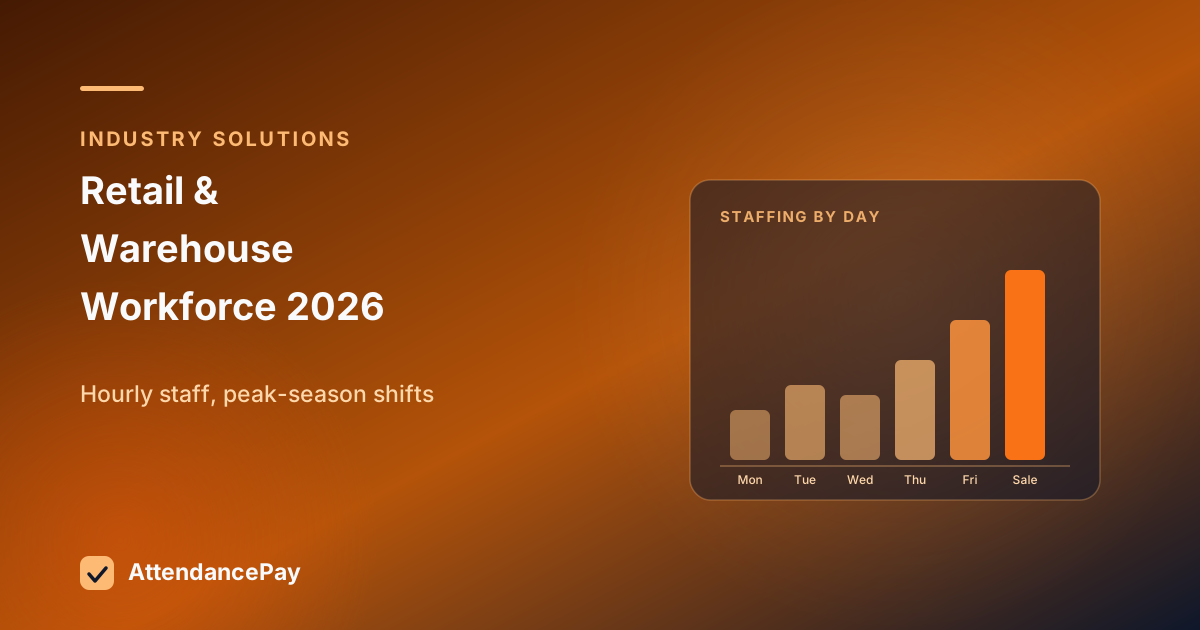
A store's staffing need on a Tuesday morning and a Saturday evening are not the same, and neither are a warehouse's inbound and dispatch peaks. Shifts are assigned per employee and per date, which means a floor team can run a genuinely variable pattern — different people on different timings on different days — without that variability living only in a manager's head or a printed sheet on a noticeboard. Employees see their assigned shifts in the app, which removes the single most common retail dispute: whether someone was actually told about a schedule change. Full mechanics in shift and roster management.
Attendance policy that does not punish the wrong people during a rush
A retail or warehouse floor during a sale event or a dispatch peak looks different from the same floor on an ordinary Tuesday, and an attendance policy that does not account for that will produce late marks and half-day deductions that reflect the calendar more than the employee's actual conduct. Grace periods, half-day thresholds and overtime eligibility are configured explicitly per policy, and different employee groups — sales floor, warehouse pickers, delivery staff — can run different policies where the work genuinely differs. See attendance policies.
Overtime that spikes correctly during peak season, not approximately
Peak season is exactly when overtime volume — and overtime risk — is highest, and exactly when a flat, poorly configured rule costs the most money in either direction. Configurable weekend and holiday multipliers, a fixed or salary-linked overtime rate, and a daily cap mean a genuine peak-season surge is priced correctly rather than either underpaid (a compliance risk) or silently overpaid because nobody is checking each entry by hand during the busiest week of the quarter. See overtime management and the underlying rules in overtime pay rules in India.
What to check before choosing a system for retail or warehouse operations
- Can hourly and monthly staff be processed in the same payroll run, without a manual step for either?
- Can shift assignment change per employee and per date, reflecting real footfall rather than a fixed roster?
- Do employees see their own schedule in an app, removing the "nobody told me" dispute?
- Is overtime priced correctly and capped during a genuine peak-season spike, not just on an ordinary week?
A retail or warehouse operation that can answer yes to all four has a system built for a workforce that changes shape — which, in this industry, it always eventually does.