A salary slip is easy to treat as a formality — a PDF that goes out with the salary and gets filed unread. It is actually a legal record. It is the document an employee produces for a loan or a visa, the one a labour inspector asks for, and the one that has to reconcile exactly with what was deposited to PF, ESIC and the tax authorities. When a payslip is wrong, it is wrong in a document that other institutions rely on.
This is what a compliant Indian payslip has to show in 2026, and where they most often go wrong.
What every payslip must contain
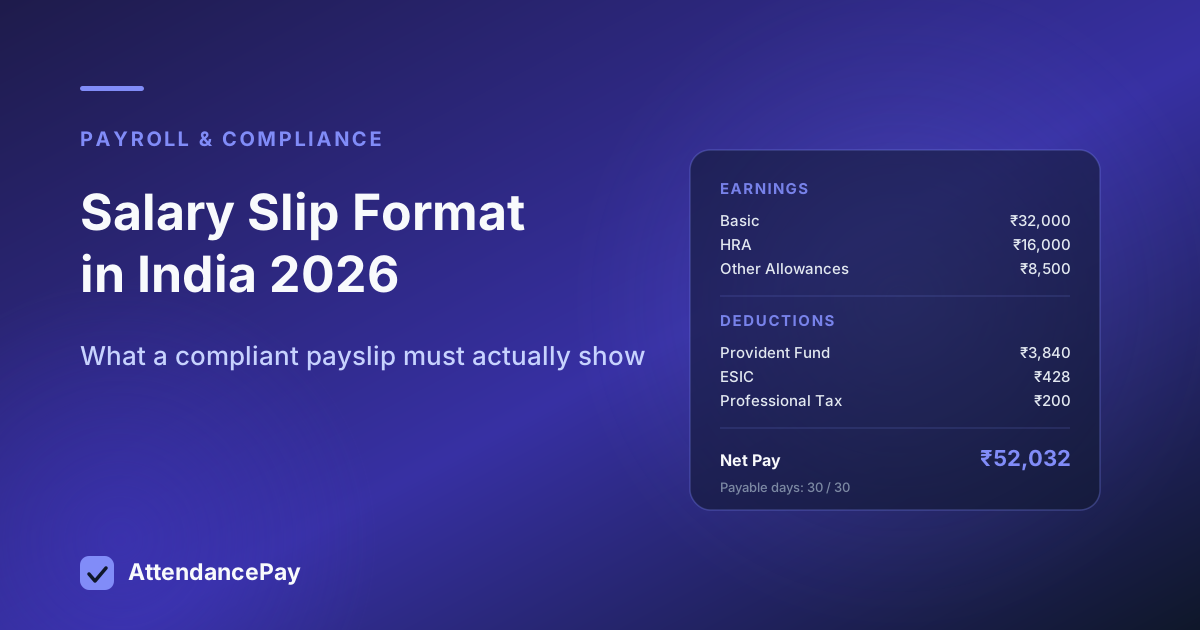
The Payment of Wages Act and the state wage rules (and, as it is notified, the Code on Wages) require that an employee can see how their pay was arrived at. In practice a compliant payslip carries four blocks:
- Identification. Employer name, employee name and ID, designation, the pay period, and the statutory identifiers that matter — UAN for provident fund and the ESIC number where applicable. Bank account and PAN are usually shown too.
- Attendance basis. The number of payable days, days present, paid leave, and loss-of-pay days. This block is what makes the earnings verifiable, and it is the one cheap payslips leave out.
- Earnings. Basic, dearness allowance where applicable, house rent allowance, and other allowances, each on its own line, totalling to gross earnings for the period.
- Deductions and net pay. Employee PF, ESIC, professional tax, TDS, and any recoveries, totalling to total deductions — and gross minus deductions as net pay, ideally shown in words as well as figures.
A payslip that reconciles will also show the employer's contributions (employer PF/EPS and employer ESIC) even though they are not deducted from the employee, because that is what makes the document tie out against the challans.
The line that matters most: basic pay
If you only audit one thing on a payslip, audit the basic. Basic pay is the base for provident fund, for gratuity, for leave encashment and for overtime. Set it too low relative to gross — the old trick of inflating allowances to shrink PF liability — and every one of those downstream calculations is understated, which is exactly the practice the Code on Wages is written to stop by defining "wages" so that allowances cannot exceed a set share of total remuneration.
The practical consequence is that basic can no longer be a residual number you back into after fixing allowances. It has to be a deliberate proportion of the compensation, and the payslip has to reflect it consistently every month. A salary structure that looks efficient today but fails the wages-definition test is a liability, not a saving.
Payable days: where the payslip and attendance must agree
Every earning on a monthly payslip is really a daily figure multiplied by payable days. If the payslip says an employee was paid for 30 days but attendance recorded 28 present, one paid leave and one LOP, the two documents disagree — and it is the payslip that loses that argument.
This is the most common source of payslip disputes, and it is not a payroll bug; it is a mismatch between two systems that were never made to share one number. When attendance, leave and payroll each keep their own count of the month, they drift. The fix is architectural: payable days must be computed once and used everywhere. AttendancePay generates payslips from the same payable-days figure the attendance and leave records produce, so the days on the slip are the days the employee actually accrued — we go into why this drift happens in why your payable days never match.
Four errors that make a payslip fail an audit
- Basic set below the wage-code threshold. Understates PF, gratuity and OT. The most consequential and the most common.
- HRA on a payslip with no rent basis. HRA is fine to pay; claiming it as tax-exempt without the supporting rent is where it becomes a problem for the employee at assessment.
- Payable days that do not match attendance. Covered above — the dispute you cannot win.
- Statutory identifiers missing. A payslip with no UAN or ESIC number where those apply is not a compliant payslip, however correct the arithmetic.
Getting the numbers right before you format the slip
A well-formatted payslip built on wrong numbers is still wrong. Before worrying about the template, it is worth checking the components that feed it: the free salary calculator and CTC calculator show how gross breaks into components, and the ESI and PF calculators show the statutory deductions on the exact wage base they apply to. If those tie out, the payslip will too. The mechanics of the smallest and most-mishandled deduction are in our guide to professional tax in Indian payroll.